
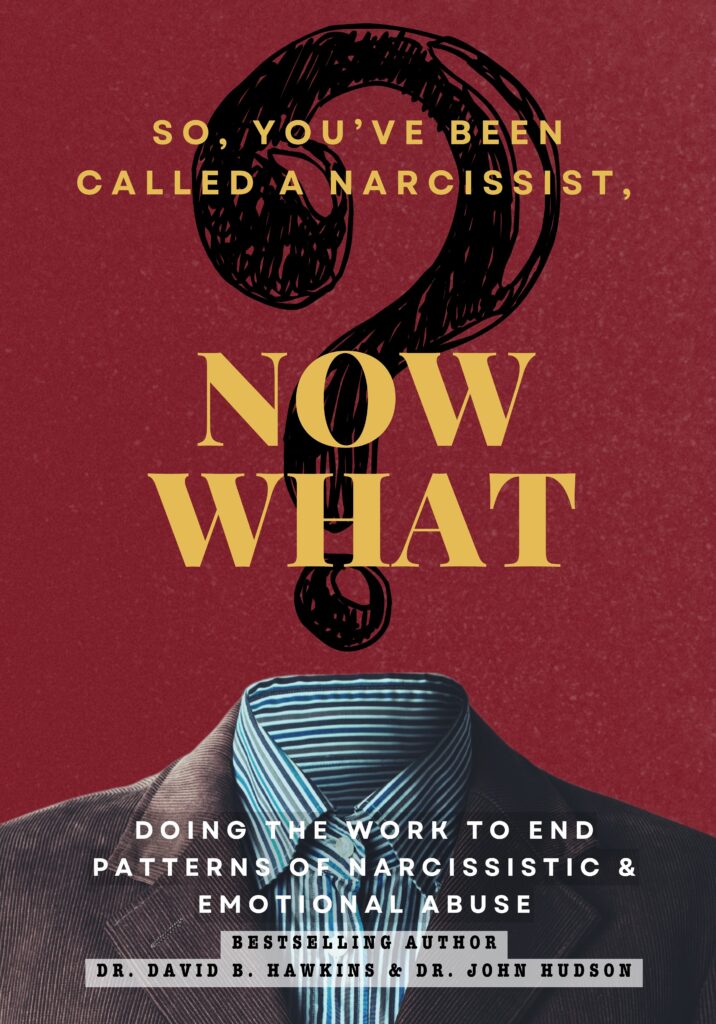
New Release!

“Finally, a powerfull,
practical resource to
understand what a narcissist
is, and more importantly,
what to do to create positive
change.”

Despite what you’ve been told,
treatment IS possible!

What If Communication Isn't the Problem?

Relationship Dynamics Assessment™

Understand What's Happening in Your Relationship

Most struggling couples assume that unhealthy communication is the source of their relationship difficulties.

But what if it’s not?

What we have found is that in most cases, communication is merely a symptom of the deeper issues, not the cause. 

WHAT YOU SEE – THE SYMPTOM

Communication Breakdown

Conversations that go nowhere;
Feeling unheard & blamed;
Conflicts repeat with no resolution.

WHAT’S UNDERNEATH – THE CAUSE

Hidden Relationship Patterns

Emotional Immaturity, Pervasive Defensiveness, Lack of Emotional Safety, Emotional Abuse, Emotional Dysregulation, Trauma Activation

Developed by Dr. David Hawkins and Dr. John Hudson, the Relationship Dynamics Assessment™ identifies the hidden patterns that are keeping you stuck – the ones that go undetected and untreated – so you can finally get the right kind of help based on your specific relationship patterns. 

In 2 minutes you will discover:

Relationship Dynamics Assessment™

Relationship Dynamics Assessment™

Note: The Relationship Dynamics Assessment™ is not a diagnostic tool. It is a self-reported assessment designed to provide insight into whether patterns such as Emotional Immaturity, Emotional Abuse, and lack of Emotional Safety are indicated in your relationship.

For each statement, choose the response that best reflects your experience of the relationship over the last 3-9 months.

1 = Never | 2 = Rarely | 3 = Sometimes | 4 = Often | 5 = Always

I feel emotionally safe expressing disagreement, hurt, or bringing a concern to my partner.
Question 1
I find myself carefully choosing my words and timing because I am concerned about how my partner will react.
Question 2
When I bring up a concern, my partner turns it back on me and the conversation becomes about my flaws instead.
Question 3
When faced with an emotional or difficult conversation, my partner shuts down, changes the subject, or minimizes the problem.
Question 4
I feel emotionally lonely inside the relationship.
Question 5
My partner shows very little awareness or concern about how their behavior affects me.
Question 6
My partner struggles to remain calm during conflict – conversations escalate quickly from calm to hostile and chaotic.
Question 7
My partner’s reactions are unpredictable and disproportionate to the situation.
Question 8
I feel dismissed, minimized, blamed, criticized, or emotionally invalidated.
Question 9
I leave difficult conversations questioning whether my perceptions, feelings, or memories are reasonable.
Question 10
I feel free to have my own opinions, boundaries, and emotional needs.
Question 11
I feel pressured to prioritize my partner's emotional comfort over my own needs.
Question 12
Promises to change are followed by meaningful changes in behavior.
Question 13
Our conflicts repeat without ever getting resolved
Question 14
Name
Name
First Name
Last Name
This box must be checked to receive your results